The Mountain City Playhouse: A Historic Venue

As many local citizens already know, mountain square dancing has a long and rich history in Rabun County. In the County’s early years, square dances were held in private homes to provide neighbors with entertainment and social interaction in an era without elaborate transportation and entertainment options. Square dancing at the end of a hard day’s labor was seen as welcome refreshment and “good, clean wholesome fun for all ages.”
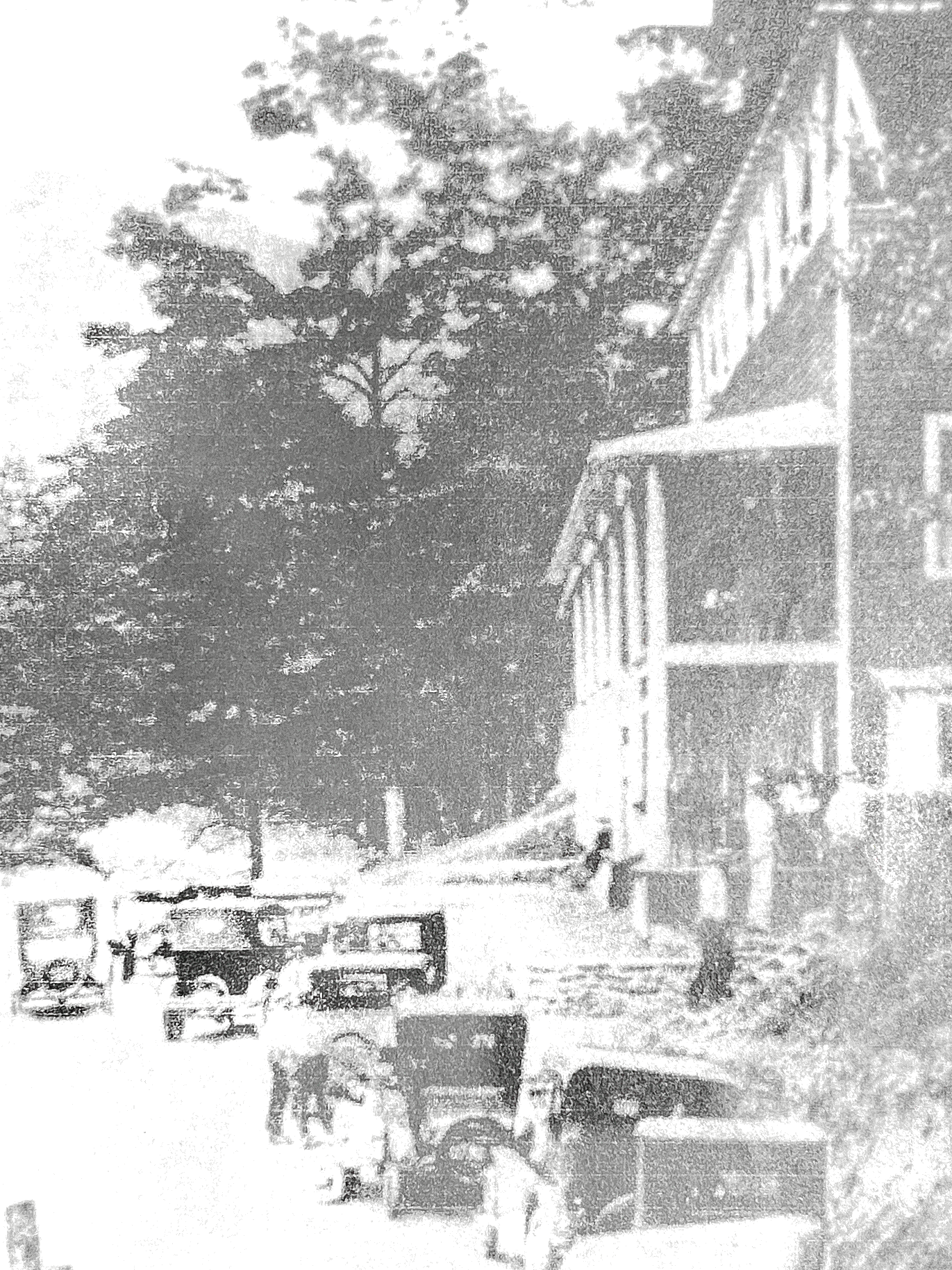
As Rabun County’s tourist business grew in the 1920s, dancing was offered by hotels where visitors and locals intermingled to the sounds of local fiddlers and guitar and banjo players. The Mountain City Hotel, near the intersection of Black Rock Mountain Road, was especially famous for square dances on its veranda. Sherrill Luther Rickman was a favorite featured caller. In the 1930s, dance halls could be found at Timpson and at Hall’s Boat House in Lakemont, as well as other locations.
World War Two brought a hiatus to Rabun’s dance halls, but from 1946 through 1948 the Clayton Fire Department held square dances every Saturday night in the high school gymnasium.
Every dancer paid 50 cents, which went to raise funds for the Fire Department.
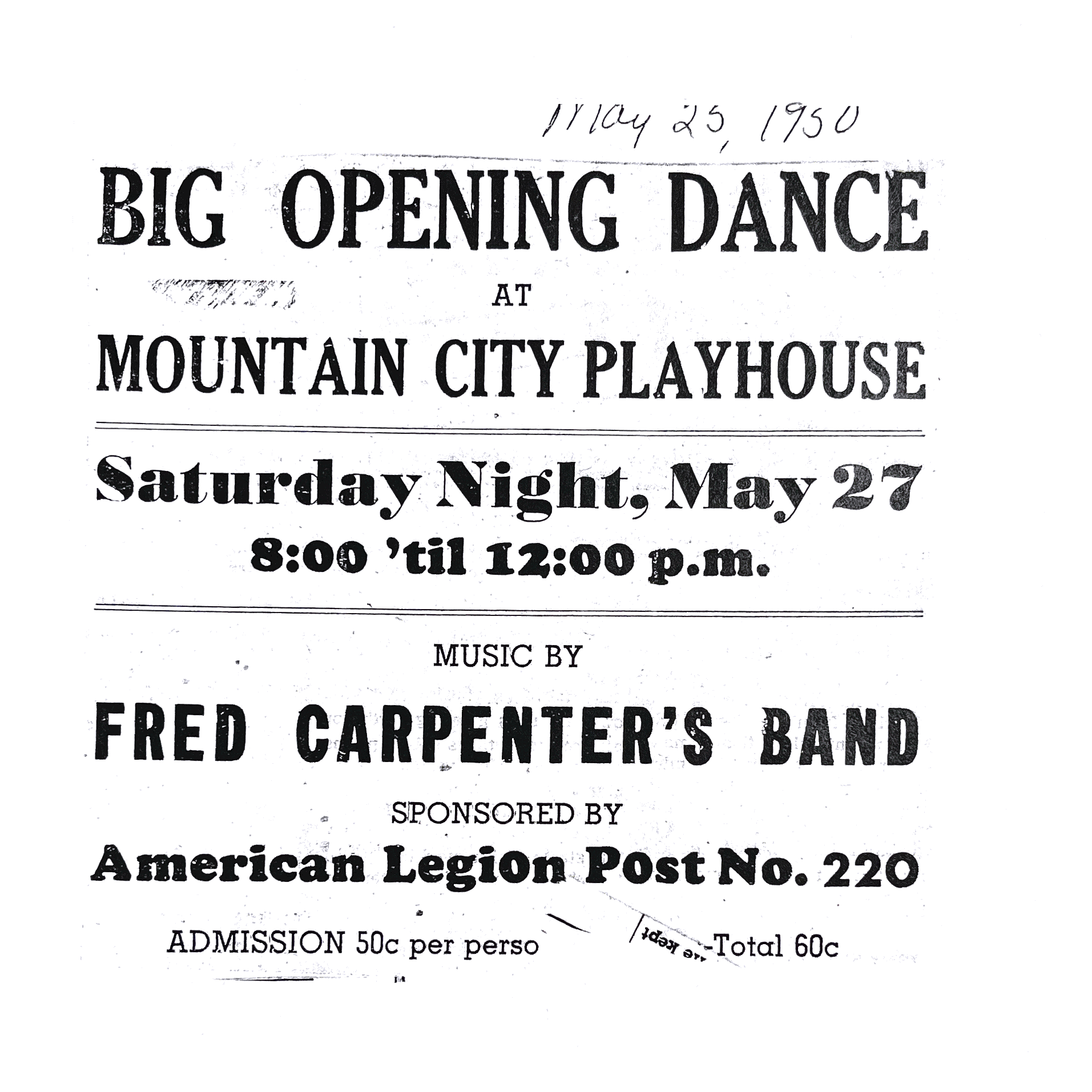
Returning war veterans from the local American Legion took over the dances, purchasing a building in Mountain City for their legion hall which became the Mountain City Playhouse.
The exact date when the American Legion Hall came to be known as the Mountain City Playhouse is unknown, but the 1950s brought dancers from far and wide who paid $3 “stag” (one person) and S5 “drag” (a couple) to square dance and buck dance on Saturday nights during the summer months. Others attended simply to watch and listen. The Playhouse also hosted roller skating during the week.
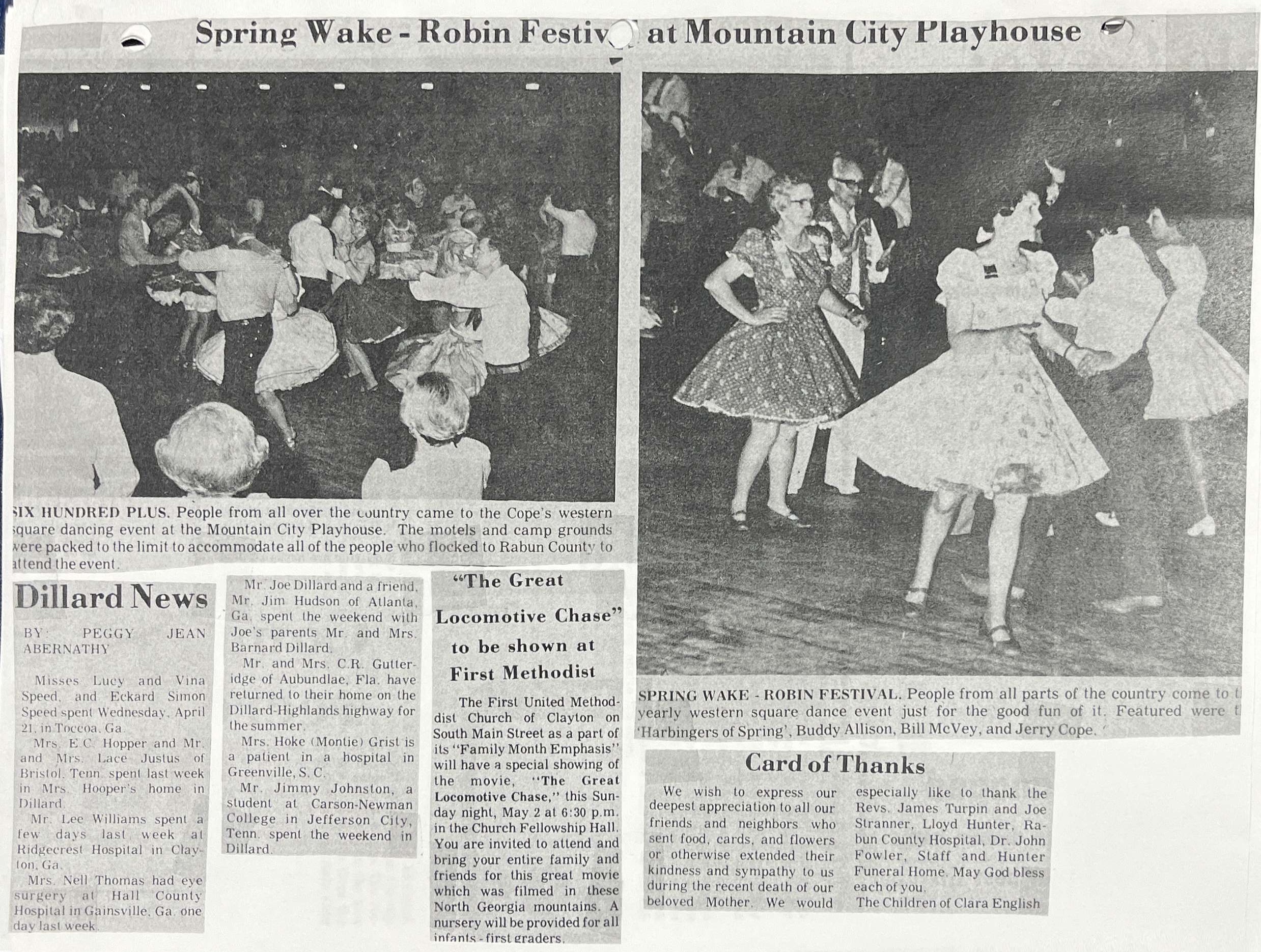

A disastrous fire in January of 1963 destroyed the Playhouse building, but American Legion Post 220 collected a small amount of insurance and begged and borrowed the rest for a new building, which opened in May of 1963. The new dance floor measured 130 by 70 feet.
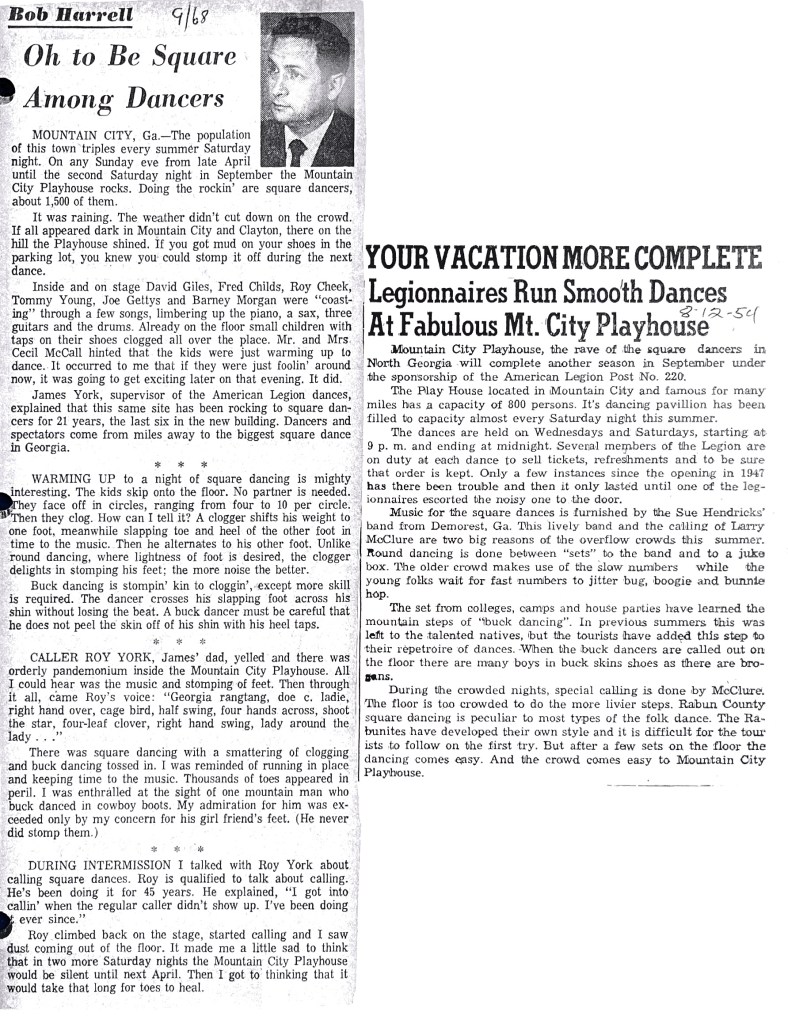
There also was seating for about 800 to 1,000 spectators and a large stage for shows. Attendance sky-rocketed, with square dancing to classics like “Down Yonder,” “John Henry,” “Alabama Jubilee,” and “San Antonio Rose” mixing with new dance crazes like the Bunny Hop. Caller Roy York, who had been calling square dances for years, yelled out moves like “shoot the star,” “four-leaf clover,” and “birdie in the cage; bird hop out; crow hop in.” One reporter in 1968 described the scene as “orderly pandemonium,” and suggested that it was this “pandemonium” that led the population of Mountain City to triple every Saturday night during the summer.
Alas, times changed and the Mountain City Playhouse ceased Saturday night mountain square dancing in the early 1980s. Yet, this form of recreation remains a fond memory for those who experienced it in its heyday. Of special note are former callers like Larry McClure, Luther Rickman, Apple Savage and Roy York, as well as the many stage musicians, who made possible for local citizens and summer visitors to enjoy this important element of Appalachian cultural history.
(Adapted from an article by Carol Law Turner, The Rabun County Historical Society)
 Mountain City Playhouse